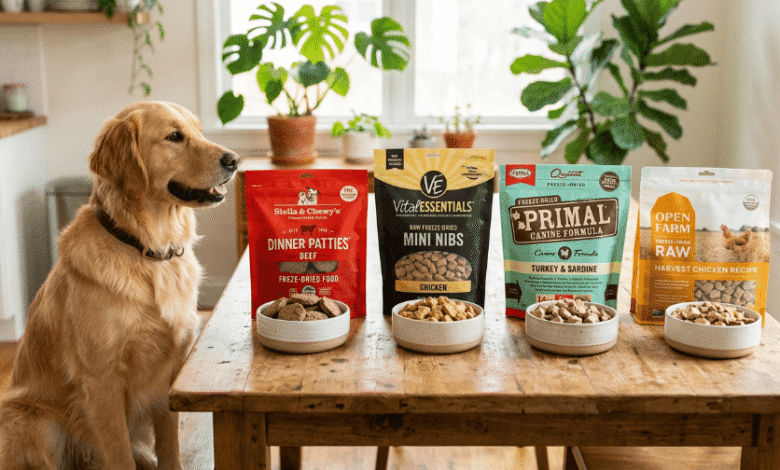
With so many pet food categories now available on the market, each claiming distinct nutritional benefits and advantages over the others, it can be genuinely difficult to know which specific option truly fits your dog’s individual needs and your household’s practical circumstances. Comparing freeze dried food for dogs against more traditional choices like standard kibble or canned wet food helps clarify which overall approach makes the most sense for your specific household and your dog’s particular needs.
Kibble: Convenient but Heavily Processed
Traditional kibble remains popular mainly due to its considerable convenience, long shelf life, and generally lower price point compared to many alternative feeding options currently available. However, the high heat processing involved in standard kibble production often strips away some of the natural nutritional value originally found in the source ingredients, requiring manufacturers to add synthetic vitamins and minerals back into the final product afterward to meet basic nutritional standards.
This reliance on synthetic nutrient fortification, while generally effective at meeting minimum nutritional requirements, does raise ongoing questions among increasingly informed pet owners about whether this approach genuinely matches the nutritional quality of less processed, whole food based alternatives.
Canned Food: Higher Moisture, Shorter Shelf Life
Canned food offers notably higher moisture content compared to dry kibble, which some dogs genuinely benefit from, particularly those prone to urinary tract issues or dogs who generally do not drink enough water on their own throughout the day. However, canned food generally has a considerably shorter shelf life once opened, typically requiring refrigeration and use within a few days, and can be less convenient overall for owners who travel frequently or who prefer buying and storing food in bulk quantities.
The higher water content in canned food also means owners are effectively paying for a product that is partially water by volume, which can make it a less cost effective option compared to more concentrated food formats when calculated on a true nutritional value basis.
Freeze Dried: A Genuine Middle Ground Worth Considering
Freeze dried food manages to combine several meaningful benefits from both of these more traditional categories. It retains considerably more of its original nutritional value compared to heavily processed kibble, while still offering the shelf stability and practical convenience that raw diets typically lack entirely, without the associated refrigeration requirements and food safety complexities that raw feeding demands.
This middle ground positioning makes freeze dried food an increasingly popular choice among pet owners who want the nutritional benefits associated with less processed, whole food based diets, but without taking on the significant additional complexity, cost, and time commitment that fully raw feeding typically requires.
Cost Considerations Worth Weighing Carefully
Freeze dried options often come with a noticeably higher price tag compared to standard kibble, directly reflecting the more careful, gentler processing methods involved in their production, along with generally higher quality source ingredients used in most freeze dried formulas. Many owners find the nutritional benefits genuinely justify this added cost, though it remains an important factor worth carefully considering and factoring into your regular, ongoing pet care budget over the long term.
Some owners choose a hybrid approach, using freeze dried food as a partial supplement mixed with more affordable kibble, striking a practical balance between nutritional quality and overall household budget considerations.
See also: Developing Emotional Resilience: Tools for Mental Health Providers
Making the Right Choice for Your Specific Dog
Every dog has genuinely different needs, and the best overall food choice often depends heavily on individual factors like activity level, existing health conditions, age, and of course personal household budget constraints that vary considerably from owner to owner. For owners looking to meaningfully upgrade their dog’s diet without committing fully to the challenges and complexity associated with raw feeding, exploring freeze dried options offers a genuinely practical and nutritionally solid alternative that is well worth serious consideration as part of your dog’s overall dietary plan.